📋 In This Article
What is Copyright?
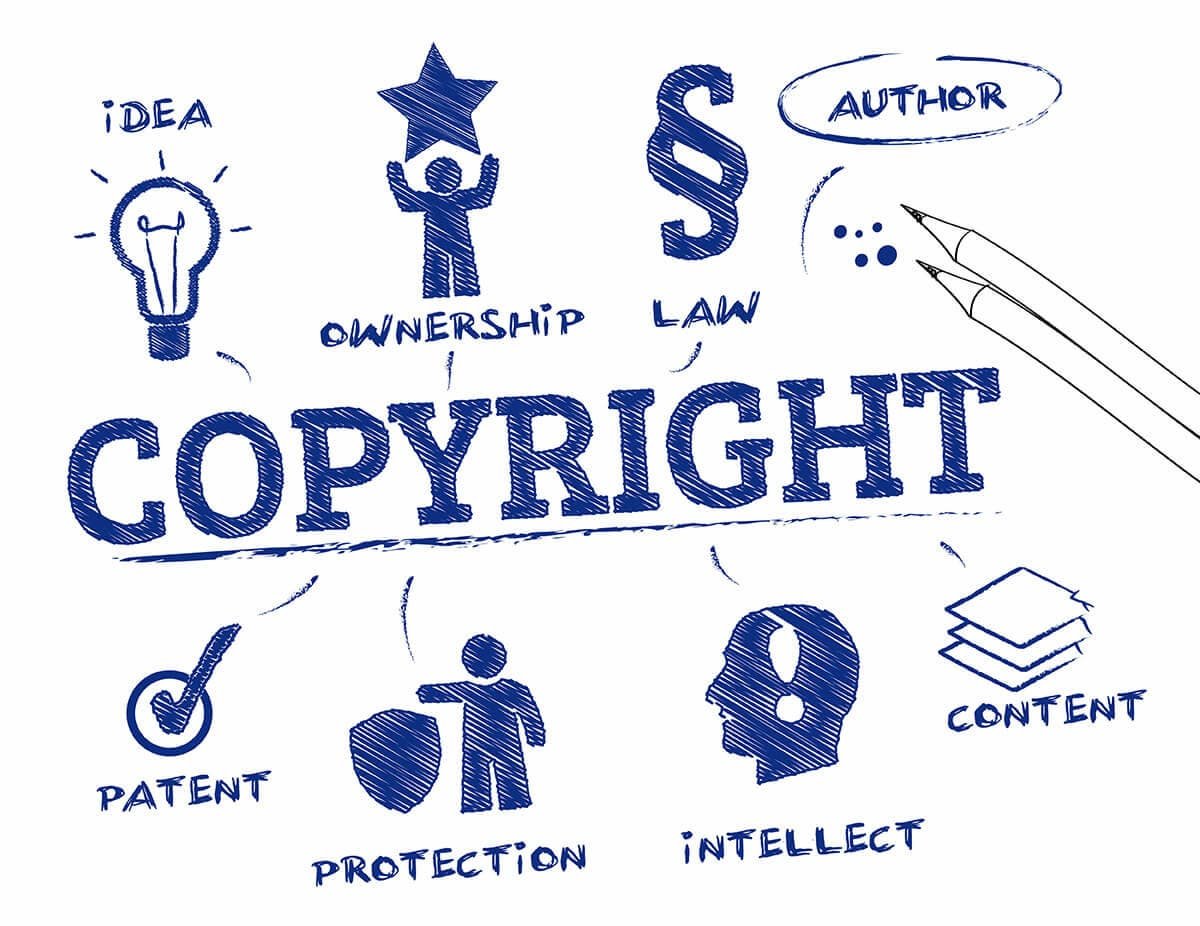
Copyright is a form of intellectual property protection that protects original creative works under the Copyright Act, 1957. It protects the expression of an idea — not the idea itself. Copyright comes into existence automatically the moment a work is created in a tangible form — no registration is required for the right to exist.
💼 Adv. Nikhil Soni & Co. — 23+ years of exclusive IP practice, 5000+ trademarks filed across India. We personally handle every IPR matter. Book a free consultation →
However, registration with the Copyright Office creates a permanent public record of ownership and is essential for effective enforcement. A copyright registration certificate is the primary document establishing authorship and ownership in legal proceedings.
Copyright vs Trademark: A trademark protects a brand name, logo or slogan used in commerce. Copyright protects original creative expression — a book, software, artwork, music or film. Both can apply to the same logo — trademark protects it as a brand identifier, copyright protects the artistic design.
Works Protected by Copyright in India
Books, articles, novels, poetry, website content, manuals, reports and computer programs (source code and object code).
Paintings, drawings, photographs, sculptures, logos, illustrations, maps, architectural drawings and engineering plans.
Compositions, songs, scores, background music and jingles — the musical notation and lyrics are protected separately.
Scripts, plays, screenplays, choreography and performances intended for staging or filming.
Movies, documentaries, web series, short films and any audio-visual work recorded on any medium.
Albums, podcasts, audio books, voice recordings and any sound fixed on a physical or digital medium.
Copyright does not protect: titles by themselves, names, short word combinations, slogans, short phrases, ideas, concepts, facts, plots, methods or information. It protects the way these are expressed — not the underlying idea.
Why Register Copyright in India?
- Legal proof of ownership:Registration certificate is admissible as evidence of ownership in court — establishing authorship and creation date
- Essential for enforcement:Without registration, it is significantly harder to prove ownership in infringement proceedings
- Platform protection:Registration required for DMCA takedowns and platform disputes on YouTube, Instagram, Amazon
- Licensing and commercialisation:Registered copyright is easier to license, assign or use as collateral
- Criminal action:Registered copyright owners have stronger grounds for criminal complaints for piracy
- International protection:India is a member of the Berne Convention — registration strengthens protection in 181 member countries
Copyright Registration Process in India
- Prepare DocumentsGather identity proof, copies of the work, author details and any applicable NOC or assignment documents
- File ApplicationApplication filed with the Registrar of Copyrights — physically or electronically (e-filing) — within 1–2 working days
- 30-Day Diary PeriodApplication entered in Copyright Diary — mandatory 30-day period during which any person may file an objection
- ExaminationIf no objection is received, the Examiner scrutinises the application for any discrepancy
- Objection Hearing (if raised)If any objection is received, both parties are heard. On successful hearing, the application proceeds
- Registration & ExtractOn successful examination, registration is granted and an extract is sent to the Registrar for entry in the Register of Copyrights
Documents Required
- ID proof of the applicant (Aadhaar, Passport or any photo ID)
- Author's identity proofif applicant and author are different persons
- 3 copies of the original work (manuscript, artwork, source code etc.)
- Details of the nature and description of the work
- NOC from the trademark registry (if the artistic work is to be used on a product commercially)
- Authorisation letter / Power of Attorney signed by the applicant
- For softwaresource code and object code (partial submission accepted for confidential software)
Copyright for Software in India
Computer programs — both source code and object code — are protected as literary works under the Copyright Act, 1957. Software copyright registration in India requires submission of both source code and object code with the application.
For proprietary software where full disclosure of code is a concern, the Copyright Office allows partial submission — typically the first 25 and last 25 pages of the source code with the middle portion redacted as confidential. This allows protection while maintaining trade secret protection over the core code.
Software copyright prevents unauthorised copying, reproduction, distribution, adaptation and reverse engineering of the code — giving the owner strong legal tools against software piracy and plagiarism.
Why Choose Adv. Nikhil Soni & Co.?
- Personal handling by senior advocateAdv. Nikhil Soni personally handles every IPR matter — clients deal directly with the advocate
- 23+ years, 5000+ trademarksExclusive IP practice since 2001 — trademark, patent, copyright, design and trade secret
- All India coverageAuthorised to appear before all five Trade Marks Offices and IP Courts across India
- End-to-end serviceSearch, filing, objection, opposition and litigation — complete IP lifecycle management
Frequently Asked Questions
Is copyright registration mandatory in India?
Copyright registration is not mandatory — copyright protection exists automatically from the moment a work is created in a tangible form, without any requirement for registration or deposit. However, registration with the Copyright Office provides crucial advantages: a registration certificate is legal proof of ownership admissible in court, establishes a clear date of creation, and is generally required to pursue infringement claims effectively. Without registration, enforcement is significantly more difficult.
What works can be copyrighted in India?
Under the Copyright Act, 1957, the following categories of works are protected: literary works (books, articles, software source code); artistic works (paintings, photographs, logos, drawings); musical works (compositions and scores); dramatic works (scripts and plays); cinematographic films (movies, web series, documentaries); and sound recordings (albums, podcasts). Copyright protects the expression of creative work — not underlying ideas, facts or methods.
How long does copyright last in India?
For original literary, dramatic, musical and artistic works, copyright protection lasts for the lifetime of the author plus 60 years, calculated from the year following the author's death. For cinematographic films, sound recordings and photographs, the term is 60 years from the year of publication. After the copyright term expires, the work enters the public domain and can be freely used by anyone.
What is the process for copyright registration in India?
The copyright application is filed with the Registrar of Copyrights, either physically at the Copyright Office in New Delhi or electronically through the online portal. After filing, the application enters a mandatory 30-day diary period during which any person may file an objection. If no objection is received, the Examiner scrutinises the application. If satisfied, the registration is granted and the registration certificate is issued.
Can a logo be protected by both copyright and trademark?
Yes — and registering both is strongly recommended for comprehensive protection. A trademark protects the logo as a brand identifier in commerce — class-specific, renewable every 10 years. Copyright protects the original artistic design of the logo from reproduction, copying or adaptation — automatically and globally for the author's lifetime plus 60 years. Together, trademark and copyright provide layered protection that prevents both brand confusion and artistic copying of your logo.
Official Resource: For authoritative information, visit Copyright Office of India.